

Let’s talk about three-Phase UPS systems for security, defence, emergency services, and transport infrastructure in Southern Africa.
Securex South Africa 2026, taking place from 2 to 4 June at the Gallagher Convention Centre in Johannesburg, will once again bring together professionals responsible for protecting critical infrastructure like security, defence, emergency services, and transport across the region. The exhibition focuses on integrated security technologies, including surveillance systems, access control, emergency communications, and control-room infrastructure.

Each of these systems relies on stable electrical power to operate continuously. For this reason, industrial three-phase UPS systems and online double-conversion UPS technology have become essential components in the design of modern security infrastructure throughout South Africa and the wider Southern African region.
Security infrastructure is only as strong as its weakest electrical point
When power quality is compromised, even briefly, the failure does not remain localised. A voltage dip in a control room can cascade into lost surveillance feeds, disrupted communications, delayed emergency response, or unsafe transport operations. In mission-critical environments where timing, visibility, and coordination are essential, electrical instability becomes a systemic risk rather than a technical inconvenience.
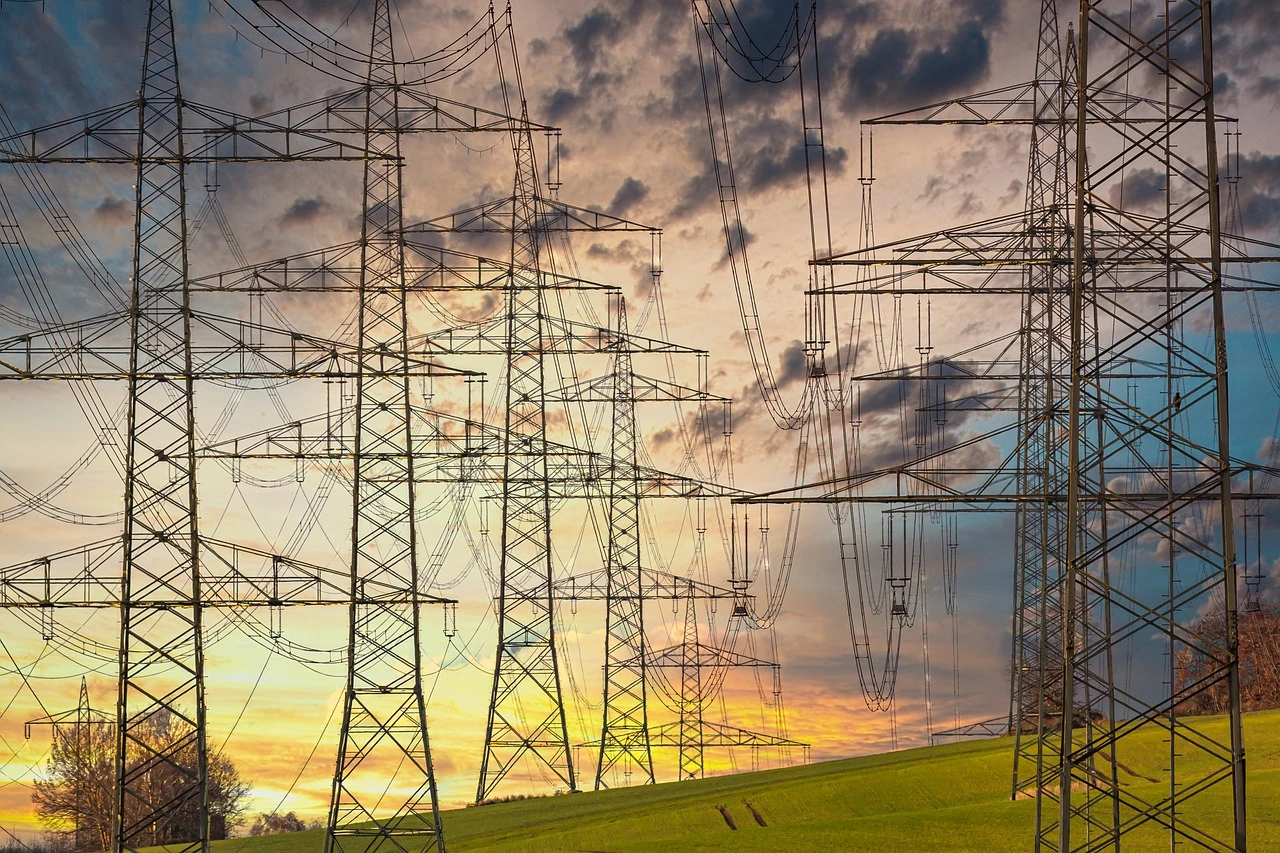
In regions where grid instability, voltage fluctuations, and unplanned outages are common, three-phase online double-conversion UPS systems form a critical layer of national infrastructure. In South Africa, where grid instability and unplanned outages remain a persistent operational challenge, uninterrupted power supply is a foundational requirement for critical infrastructure rather than a contingency measure. Industrial three-phase UPS systems provide continuous, regulated, and electrically clean power that allows complex security and transport systems to function as designed, even when utility power cannot be relied upon.
As a leading supplier of Riello UPS systems, Standby Systems delivers industrial-grade three-phase UPS solutions engineered specifically for security, defence, emergency services, and transport infrastructure across South Africa, Namibia, Botswana, Zimbabwe, Mozambique, Lesotho, Eswatini, and Malawi. These systems are designed to protect interconnected operations where the failure of a single electrical point can compromise the entire network.
Where Systems Fail in the Security and Transport Infrastructure
In mission-critical environments, power instability rarely causes a single, isolated failure. Instead, it exposes weak electrical points within complex systems that are expected to operate continuously and in perfect coordination. These failures often occur not during prolonged outages, but during brief voltage fluctuations, brownouts, or unstable transitions that fall outside standard operating tolerances.
Loss of Real-Time Surveillance and Command Visibility
Surveillance platforms, access-control systems, and command-and-control environments depend on continuous synchronisation across cameras, servers, storage devices, and operator consoles. In practice, voltage instability can cause partial system resets, frozen video streams, or delayed data feeds rather than complete shutdowns. These conditions create blind spots that may go unnoticed until a security incident occurs.
In environments such as airports, border-control facilities, or national security centres, even a momentary loss of visibility undermines situational awareness and compromises coordinated response.
Breakdown of Critical Communication Channels
Emergency services, law enforcement agencies, and security forces rely on uninterrupted communication infrastructure to coordinate personnel and resources in real time. Power disturbances can force communication servers, radio repeaters, or network switches to reboot or lose synchronisation. The result is not always a total communications blackout, but fragmented connectivity that delays information flow between field teams and control rooms.
These delays directly affect response times, decision-making accuracy, and operational effectiveness during critical incidents.
Disruption to Transport Operations and Passenger Safety
Transport infrastructure is particularly vulnerable to unstable power due to its reliance on distributed control systems. Airports depend on power for runway lighting, navigation aids, baggage handling automation, and access-control systems. Rail networks rely on electrically powered signalling, track switching, and centralised control rooms.
In practice, power instability can halt baggage systems, interrupt signalling logic, or trigger system faults that force services to stop as a safety precaution. These failures increase the risk of operational delays, passenger disruption, and safety incidents.
Data Corruption, System Errors, and Accelerated Equipment Wear
Power instability not only interrupts operations, but it also degrades systems over time. Irregular voltage and electrical noise can corrupt databases, disrupt automation sequences, and cause errors in time-sensitive logging and tracking systems. Equipment exposed to repeated micro-interruptions experiences higher thermal stress and component fatigue, leading to premature failure and increased maintenance requirements.
Over the long term, these hidden electrical stresses increase lifecycle costs and reduce the reliability of critical infrastructure.
What These Failures Demand from a UPS System in Mission-Critical Infrastructure
The failures seen across security, defence, emergency services, and transport infrastructure reveal a common truth. Mission-critical environments do not fail solely because of a lack of backup power; they fail when electrical protection is not designed to withstand real-world operating conditions. Selecting the correct UPS technology is not only a technical decision but a long-term infrastructure commitment, particularly when system reliability, electrical robustness, and service support are critical.
To prevent cascading operational issues, a UPS system must deliver more than short-term battery autonomy. It must actively stabilise power, tolerate abnormal electrical conditions, and support continuous operation across complex, high-load environments.
Sustained Power Capacity for Always-On Infrastructure
Security command centres, radar installations, airport control rooms, and rail signalling systems operate continuously and draw significant electrical loads. A three-phase UPS system provides the sustained power capacity required to support multiple critical systems simultaneously without overload or degradation.
Continuous Power Conditioning Through Online Double-Conversion
Voltage dips, harmonics, transient spikes, and frequency variations can disrupt sensitive equipment while remaining invisible to standard backup solutions. Three-phase online double-conversion UPS systems continuously regenerate incoming power, delivering a stable, clean output regardless of utility conditions.
Zero-Interruption Transfer During Utility Failure
In security and transport environments, even a momentary loss of power can compromise safety, visibility, or coordination. A three-phase online double-conversion UPS operates with no transfer time during power loss, ensuring uninterrupted operation for control rooms, signalling systems, communication servers, and monitoring platforms. This level of continuity is only achievable when the UPS system is correctly paired with appropriate battery technology designed for the operating environment and load profile.
Electrical Robustness for Harsh and Unstable Grids
Power infrastructure across Southern Africa often presents challenging operating conditions, including high fault levels and unstable supply. Industrial three-phase UPS systems are engineered to tolerate these conditions without failure, providing resilience where lighter commercial systems may struggle.
Designed for Continuous Operation and Long-Term Reliability
Security installations, emergency response centres, and transport hubs operate continuously. Three-phase industrial UPS systems are designed for long service life, predictable thermal performance, and reduced component stress, supporting long-term uptime and lower total cost of ownership.
Where Three-Phase UPS Protection Is Operationally Critical
In environments where power instability can trigger cascading operational failures, three-phase UPS systems are deployed at points where continuity, coordination, and system visibility cannot be compromised.
Surveillance and Security Control Centres
Three-phase UPS systems ensure the continuous operation of CCTV networks, access-control platforms, perimeter monitoring, and threat-detection systems. In these environments, partial system failure is often more dangerous than a complete outage, as it creates false confidence in system availability.
Emergency Response and Dispatch Centres
Emergency call centres rely on uninterrupted power for communication consoles, mapping systems, and tracking platforms. A three-phase UPS system ensures that operators remain online during grid instability and emergency conditions.
Airports and Aviation Infrastructure
Airports depend on highly sensitive electrical systems for runway lighting, radar platforms, air traffic control consoles, baggage handling automation, and passport-control systems. Three-phase UPS protection prevents disruptions that could compromise safety and operational efficiency.
Rail Signalling, Control Rooms, and Transport Networks
Rail networks rely on consistent power for signalling lights, track-switching equipment, and centralised control environments. A three-phase industrial UPS eliminates electrical instability as a variable in signalling integrity, allowing safety systems to perform exactly as designed.
Logistics Hubs and Distribution Centres
Ports, warehouses, and logistics centres depend on automated handling systems, barcode scanners, communications platforms, and servers. Three-phase UPS units ensure continuity during outages, protecting stock movement and delivery schedules.
Selecting the Right Three-Phase UPS Based on Real-World Failure Conditions
Not all mission-critical environments fail in the same way. Electrical instability presents differently depending on grid behaviour, fault levels, load profiles, and operational intensity. Selecting the correct three-phase UPS, therefore, requires matching your UPS configuration to the dominant risks within the infrastructure.
When Electrical Isolation and Fault Tolerance Are Non-Negotiable

Riello Master HP
The Riello Master HP is a transformer-based three-phase online double-conversion UPS designed for environments exposed to severe voltage disturbances and high fault currents. Its galvanic isolation and hardy electrical makeup protect sensitive systems from upstream electrical stress.
Ideal for national defence installations, airport control systems, and rail signalling environments operating under harsh grid conditions.
When Scale, Load Diversity, and Long-Term Stability Are the Priority

Riello Master MPS
The Riello Master MPS is engineered for large-scale mission-critical infrastructure supporting mixed and non-linear loads. It offers high overload capability, long-term stability, and engineered, parallelable system configurations suited to industrial environments.
Used in defence command centres, major transport hubs, and national infrastructure projects.
When Continuous Operation and Energy Efficiency Must be Balanced

Riello Sentryum
The Riello Sentryum is a transformerless three-phase online double-conversion UPS designed for continuous-operation environments where efficiency, precise voltage regulation, and compact design are key considerations.
Well-suited for surveillance centres, emergency response environments, and logistics facilities operating twenty-four hours a day.
Events such as Securex South Africa highlight just how critical power protection has become within modern security environments. As surveillance systems, access-control infrastructure, monitoring platforms, and transport networks grow more sophisticated and interconnected, the requirement for reliable three-phase UPS systems becomes even more central to operational resilience.
Protecting National Infrastructure with Standby Systems

Security operations, defence networks, emergency response units, and transport hubs depend on electrical stability to operate safely and efficiently. A three-phase industrial UPS is essential for preventing power disturbances from disrupting communication systems, surveillance platforms, airport operations, rail signalling, and national logistics networks.
Standby Systems supplies proven Riello three-phase online double-conversion UPS systems engineered to withstand harsh electrical conditions and continuous operational demands. Through professional system design, installation, and long-term support, Standby Systems ensures that mission-critical infrastructure across Southern Africa remains protected against power instability.
Whether supporting an airport, defence installation, security command centre, or transport hub, Standby Systems delivers industrial UPS solutions designed to protect operations where failure is not an option.
For expert advice on UPS system selection, battery solutions, installation, or servicing, contact Standby Systems on 011 794 3406 for service support, 011 794 2541 for UPS systems sales, or 082 450 2361 for technical assistance.
Visit Standby Systems’ website, or find us on Facebook, LinkedIn, Instagram, and YouTube.