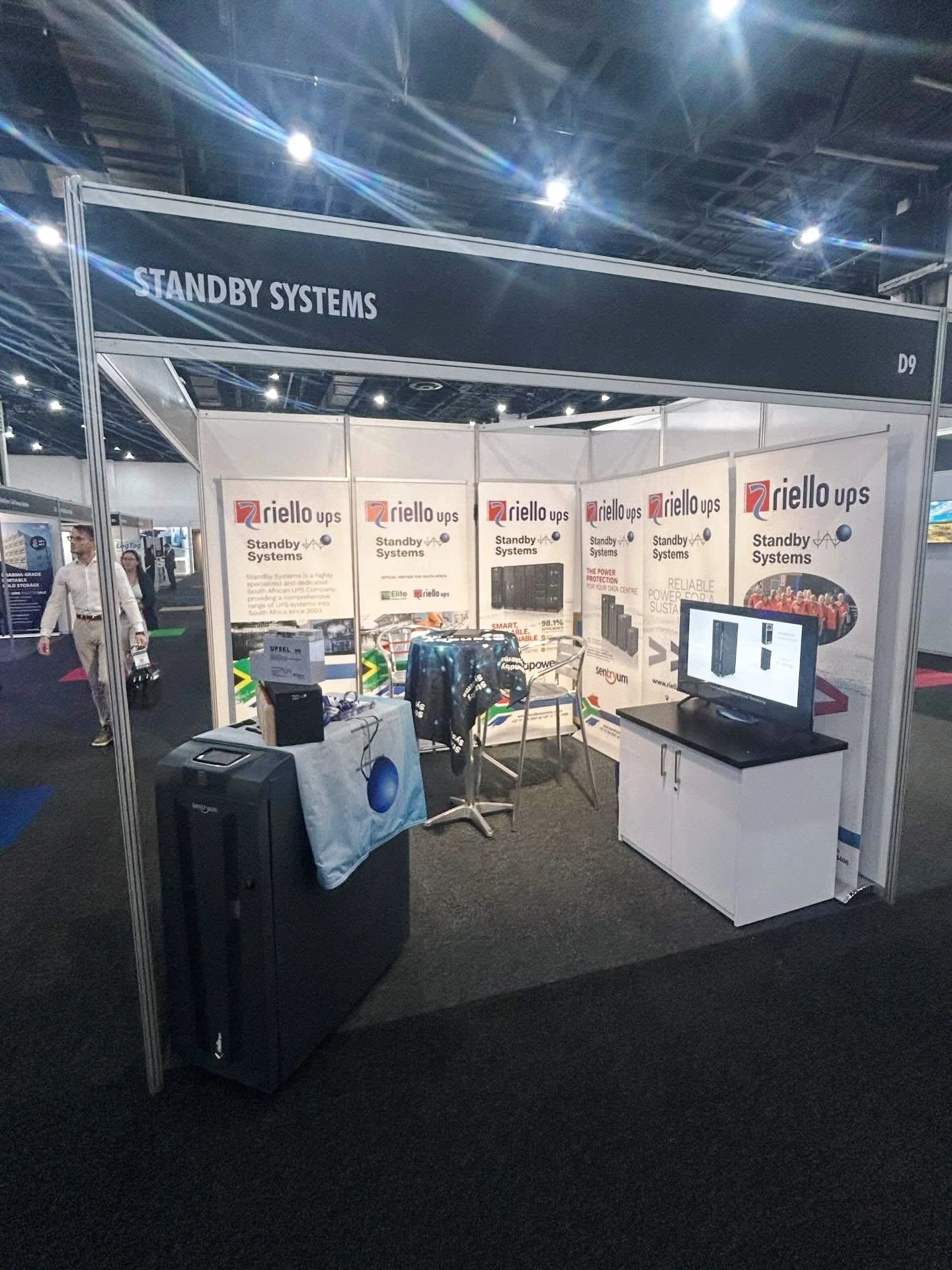
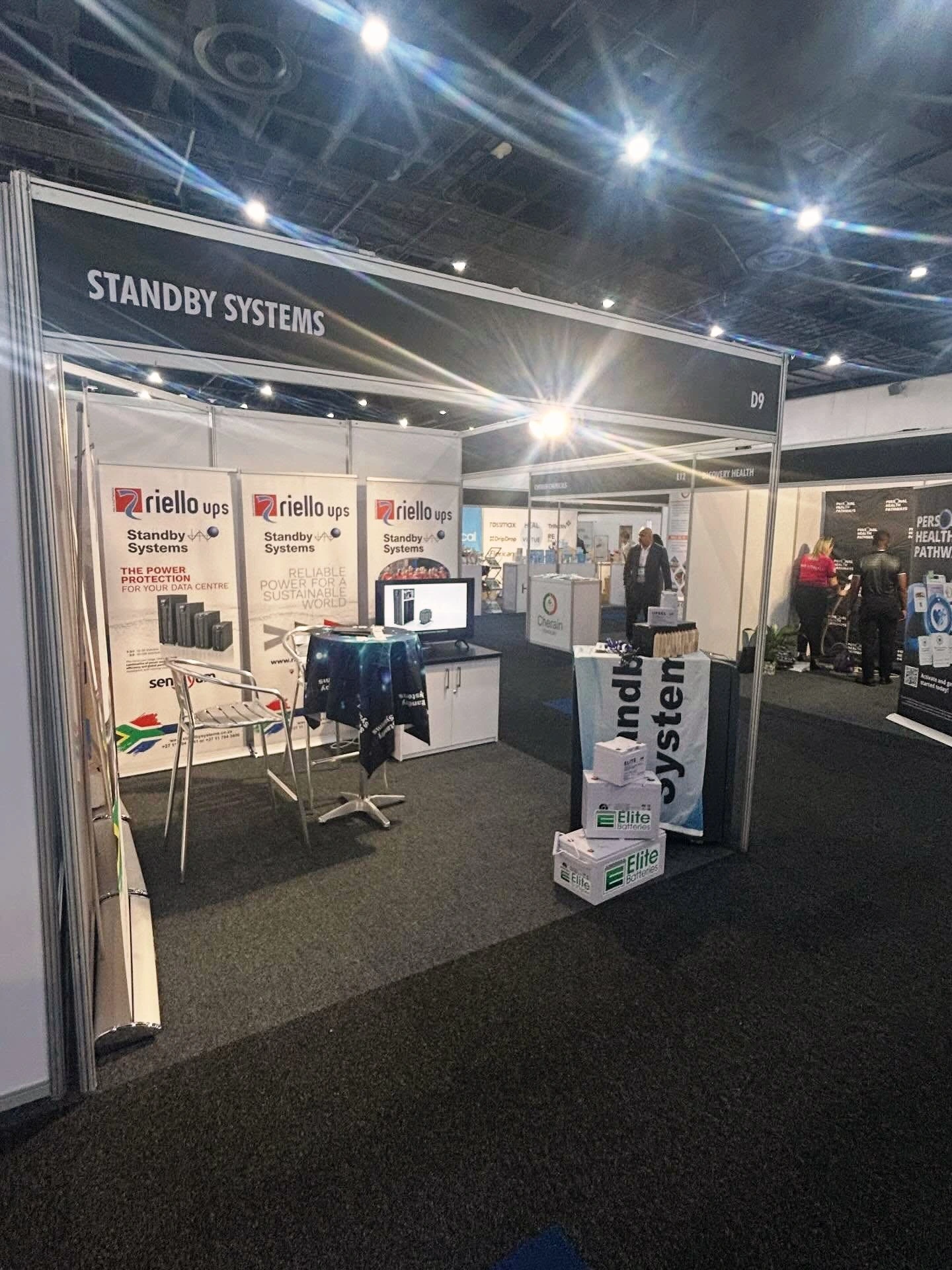
Standby Systems Africa exhibiting at Securex South Africa 2026, Hall 2 Stand F11
What SAPHEX 2026 revealed about power protection, and why it matters for SECUREX.
At SAPHEX 2026, one question came up repeatedly.
Not, “Do we need backup power?”
That is already understood.
The real question was more specific.
“How do we eliminate micro-disruptions that don’t shut us down, but quietly compromise production?”
This is where the conversation has shifted.
In pharmaceutical manufacturing, power failure is no longer defined by outages alone. Engineers and plant managers are increasingly focused on the less visible risks, voltage fluctuations, harmonic distortion, and sub-second instability that can interfere with sensitive processes, invalidate batches, or trigger compliance issues.
This is why online double-conversion UPS systems and carefully engineered UPS configurations are no longer optional. They are part of the production environment itself.
At SAPHEX, discussions moved into areas such as:
What became clear is this.
In pharmaceutical environments, power protection is not about recovery. It is about prevention.
That same principle applies beyond pharmaceutical manufacturing.
Because while SAPHEX is driven by precision and compliance, the environments we will see at SECUREX operate under a different kind of pressure.
Security infrastructure does not tolerate interruption.
Not even for a fraction of a second.
Security systems are only as reliable as the power behind them.
A surveillance network, access control system, or control room may appear fully operational, but a momentary voltage drop can cause:
These are not theoretical risks. They are real-world vulnerabilities.
And this is where the role of three-phase UPS systems and industrial UPS systems becomes critical, not just to provide backup power, but to deliver continuous, conditioned, stable power at all times.
From 2 to 4 June at Gallagher Convention Centre, Standby Systems will be exhibiting at Securex South Africa 2026.
This is not just about showcasing equipment.
It is about addressing the reality of power instability in high-demand environments.
At Stand F11, we will be exploring questions such as:
These are the kinds of conversations we are looking forward to having: practical, scenario-based, and grounded in real operating conditions.
If you are responsible for protecting critical infrastructure, this conversation is directly relevant to you.
We encourage professionals involved in the following to visit our stand:
Our team will be available to discuss UPS configuration, battery strategy, and the most effective power protection approach for your specific application.
Hall: 2
Stand: F11
If uninterrupted performance matters in your environment, this is a conversation worth having.
Can’t wait until June?
Contact Standby Systems today to discuss your three-phase UPS requirements and system design.
From pharmaceutical production environments to security infrastructure, the requirement is the same.
Power must be stable.
Power must be continuous.
Power must be trusted.
Standby Systems supports organisations across South Africa, Namibia, Botswana, Zimbabwe, Mozambique, Angola, Lesotho, Eswatini, and Malawi with engineered industrial UPS systems designed for real-world conditions.
In our experience, we have encountered nine common UPS specification mistakes, so we put together…
In this blog, we detail why generator-supported loads still need online UPS protection. Many organisations…
Southern Africa is at a turning point with its power production, but we are not…
In this blog, we discover how UPS systems protect distribution centres, courier facilities, and warehouse…
In this blog, we uncover five more industries where power instability creates immediate operational risk.…
Standby Systems shares what SECUREX 2026 confirmed about UPS power protection in South Africa’s security…