Understanding the leading causes of premature UPS battery failure in industrial and commercial environments.
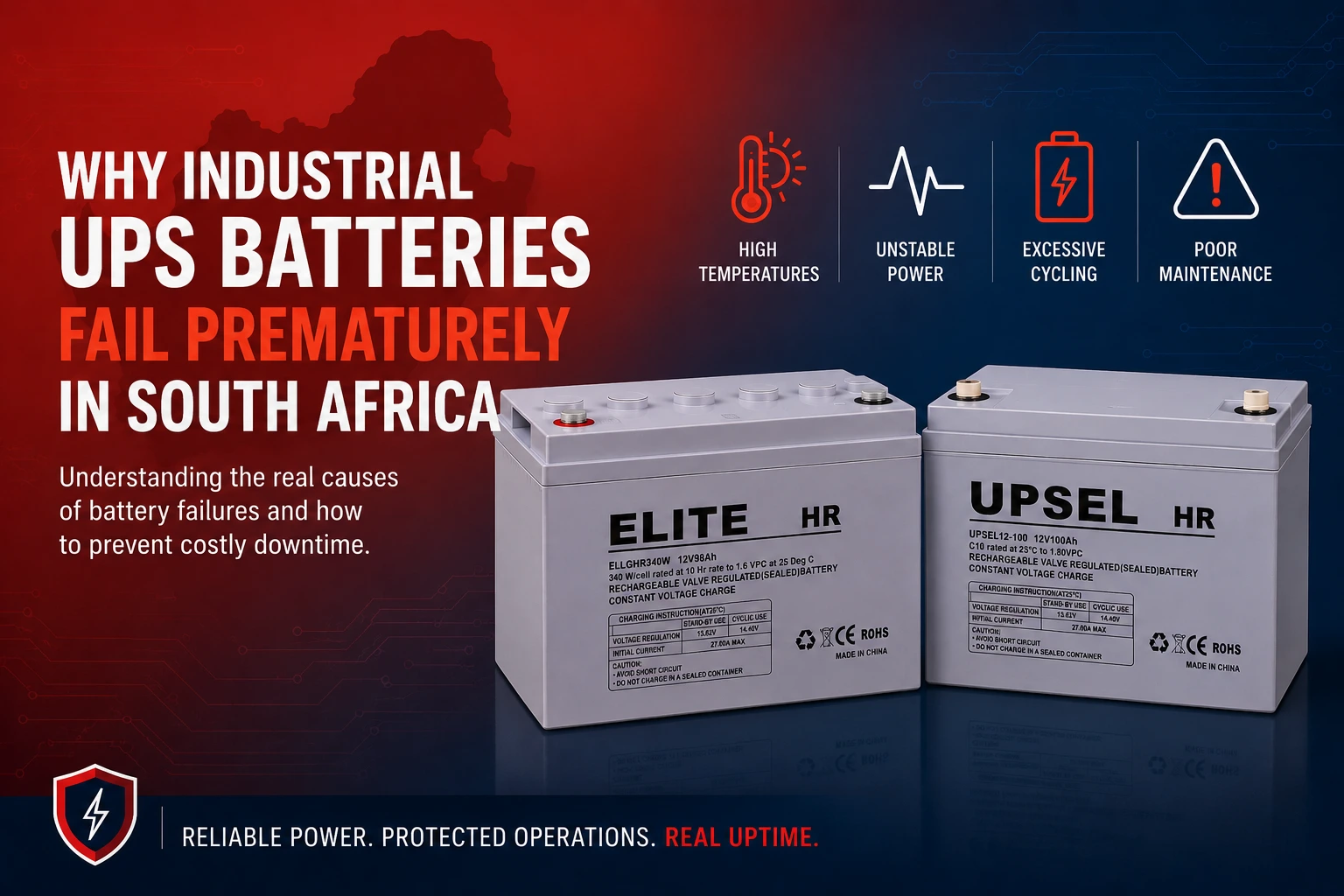
In this blog, we investigate why industrial UPS batteries fail prematurely in South Africa, because in many UPS failures, the UPS itself is not the problem, the battery system is.
Across South Africa and the broader Southern African region, businesses often invest heavily in UPS infrastructure while paying far less attention to the batteries supporting it. That imbalance causes problems later, particularly in environments dealing with unstable utility supply, repeated outages, generator transitions, high ambient temperatures, and inconsistent maintenance practices.
A UPS battery operates under demanding conditions. It must react instantly during a power interruption while supplying high levels of energy to sensitive equipment. Unlike standby generators, there is no startup delay and no margin for hesitation.
When the battery system is poorly selected, incorrectly configured, exposed to excessive heat, or inadequately maintained, runtime drops, discharge performance weakens, and battery failures become increasingly common.
For hospitals, industrial plants, security infrastructure, mining operations, data centres, and production facilities, that can mean dropped loads, failed generator startups, equipment shutdowns, and costly operational downtime.
A UPS battery is designed to deliver large amounts of energy over relatively short periods of time, typically up to 30 minutes.
Internally, the battery functions as a chemical process. Performance depends heavily on the amount of lead surface area available to react with the electrolyte. Higher-performance applications therefore require greater effective surface area within the battery design itself.
This is one reason battery selection should never be treated as a secondary consideration in a UPS configuration.
Several battery technologies are used in online double-conversion UPS systems, each with different strengths, maintenance requirements, and operating limitations.
Vented lead-acid batteries remain technically strong performers with excellent reliability and long service life.
In practice, though, they create major infrastructure demands. These batteries require dedicated battery rooms, regular maintenance, ventilation systems, and significant installation space. The maintenance burden alone makes them impractical for many commercial and IT environments.
They are still used in certain heavy-duty and industrial applications where long life expectancy and robustness justify the additional cost and infrastructure requirements.
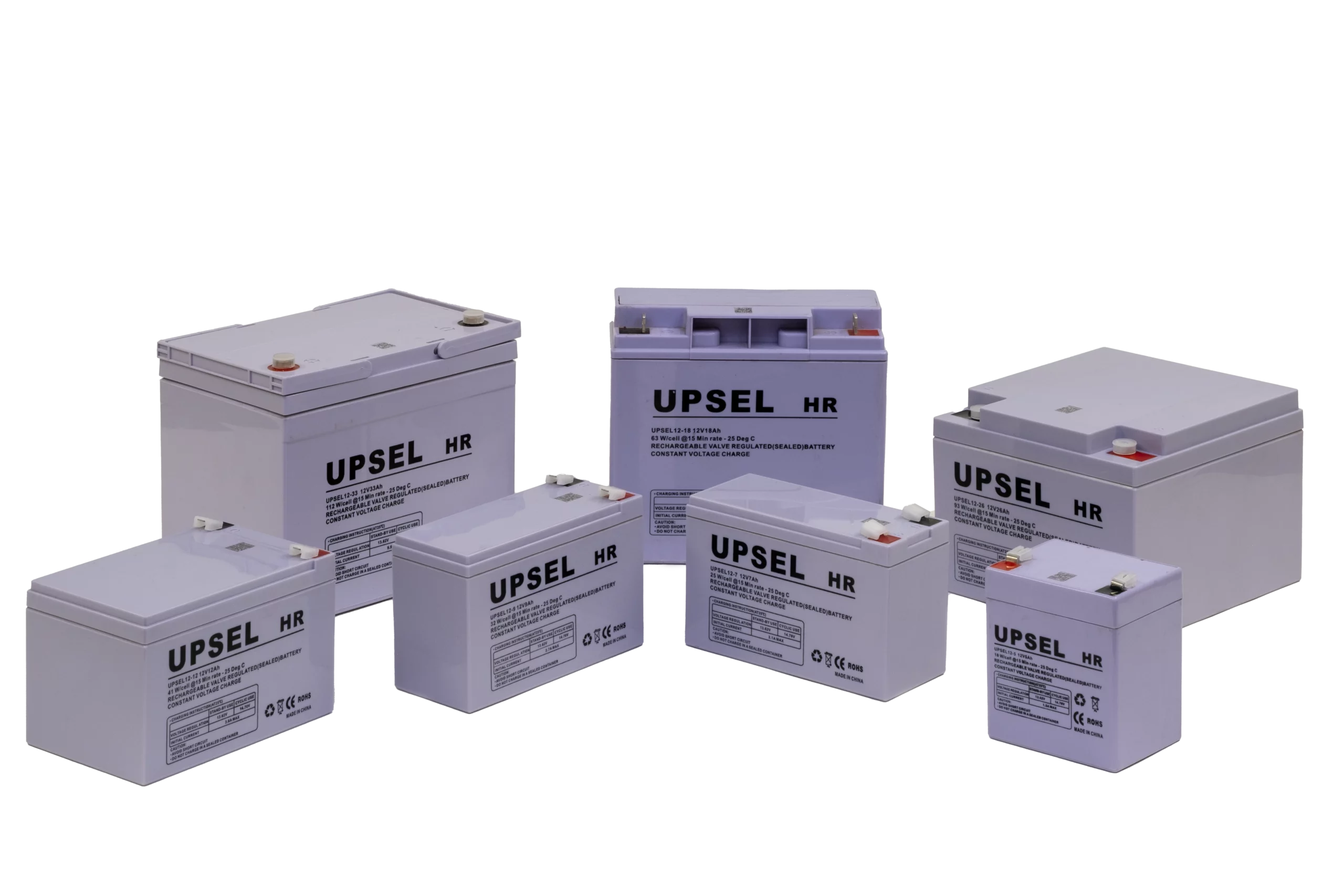
Valve-regulated lead acid batteries, commonly referred to as VRLA batteries, are now the dominant battery type used in commercial UPS installations and industrial UPS systems.
These batteries are often incorrectly called “sealed batteries.” They are not fully sealed. Pressure relief valves release excess gas during charging conditions to prevent dangerous pressure buildup inside the cell.
Their popularity comes down to practicality.
VRLA batteries:
For most IT rooms, healthcare facilities, control rooms, and commercial installations, VRLA batteries remain the preferred solution.
VRLA batteries are typically available in two formats:
AGM batteries use a glass mat separator to hold the electrolyte in place. This reduces leakage risk and improves operational safety.
Gel batteries use gelled electrolyte instead. Under elevated temperatures, however, gel batteries tend to dry out faster than AGM batteries. That becomes important in hotter operating environments and poorly controlled battery rooms.
For this reason, AGM batteries are generally more widely used across Southern African UPS applications.
This is one of the biggest misconceptions in the UPS industry.
A battery sold as a “10-year battery” is not guaranteed to survive ten years in real operating conditions.
VRLA batteries are rated according to design life under tightly controlled laboratory conditions, typically at ambient temperatures between 20°C and 25°C. Even then, the expectation is simply that the battery should still retain around 80% of its original capacity at the end of that period.
Real operating environments are rarely this stable.
In Southern Africa, UPS batteries are frequently exposed to:
Regular power failures, whether planned or unplanned, and unstable grid conditions have also introduced another problem: excessive cycling.
Many battery systems now experience repeated discharge and recharge events over short periods. That constant cycling accelerates battery wear and places additional stress on the internal chemistry of the cell.
In many facilities, batteries begin deteriorating long before the advertised design life is reached.
Replacement planning should start well before the expected end-of-life period.
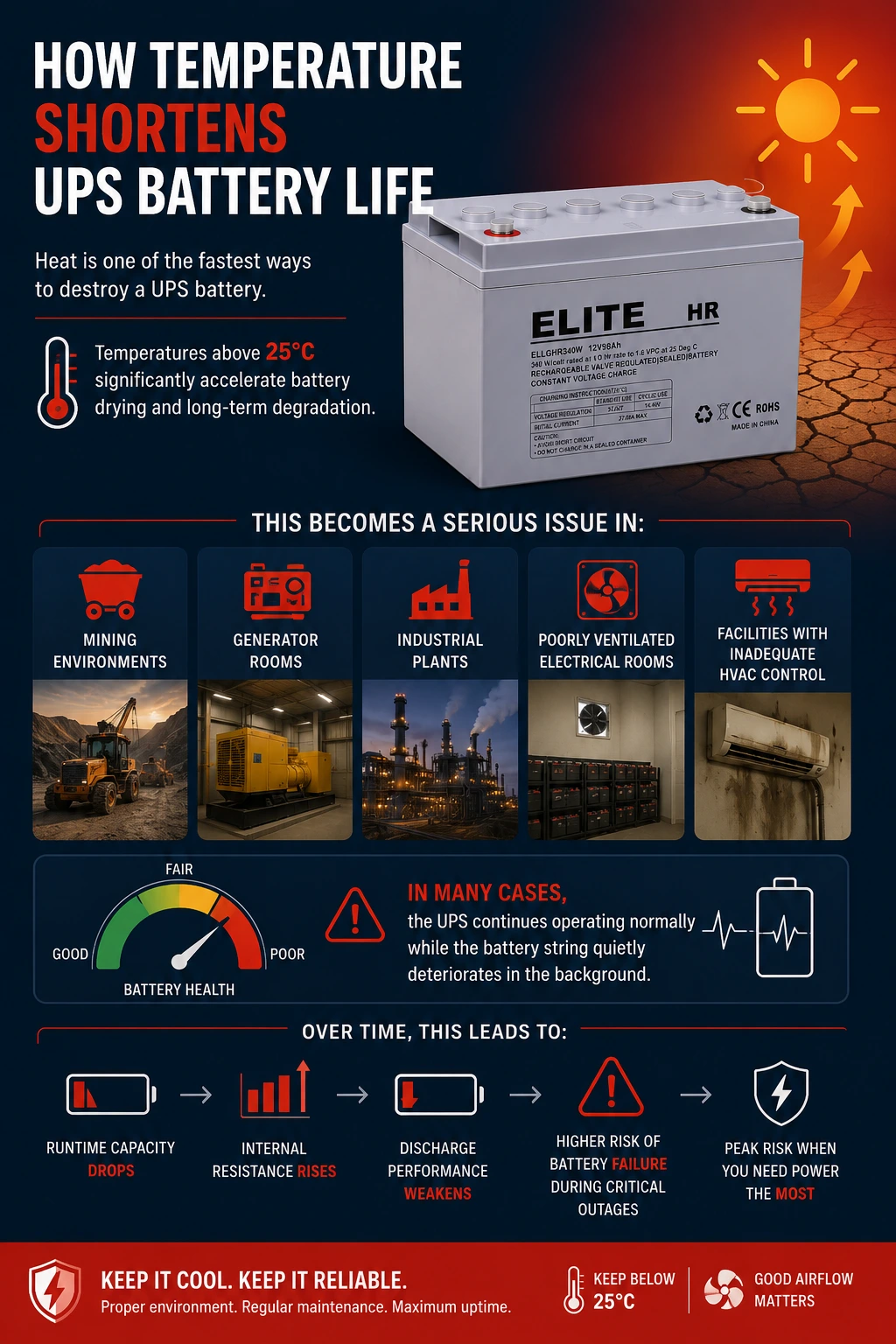
Heat is one of the fastest ways to destroy a UPS battery.
Temperatures above 25°C significantly accelerate battery drying and long-term degradation.
This becomes a serious issue in:
In many cases, the UPS continues operating normally while the battery string quietly deteriorates in the background.
Over time, runtime capacity drops, internal resistance rises, discharge performance weakens, and the likelihood of battery failure during a critical outage increases substantially.
The term “maintenance-free battery” has probably caused more battery neglect than any other phrase in the industry.
Every UPS battery requires maintenance.
Even low-maintenance VRLA batteries still require:
Dust buildup creates another risk. If contamination blocks the pressure relief valve, excess gas may not vent correctly during charging.
In harsh operating environments, poor maintenance eventually contributes to swelling, thermal instability, reduced runtime, and complete battery failure.
A good battery installed badly still becomes a problem.
Battery configuration has a direct impact on reliability, safety, maintenance access, and long-term UPS performance.
Best practice typically includes:
Battery stands are also often preferable to enclosed cabinets because developing problems become easier to identify visually during inspections.
In critical environments, poor battery configuration can introduce single points of failure that compromise the entire UPS system.
Battery sizing is not simply a matter of choosing how many minutes of backup are required.
Correct sizing depends on:
Incorrect sizing can lead to:
In larger industrial UPS systems, battery sizing should always form part of the overall UPS configuration and power protection approach rather than being treated as a standalone calculation.
Battery reliability is shaped by far more than the battery itself.
Room temperature, ventilation, charging conditions, maintenance quality, cycling frequency, UPS configuration, and installation practices all influence long-term performance.
That becomes especially important in environments dealing with unstable grid conditions, frequent outages, elevated temperatures, and generator-supported infrastructure.
In many facilities, the UPS is healthy while the battery system is already deteriorating.
By the time the problem becomes visible, the site may already be operating with reduced runtime capacity or compromised backup protection.
For critical infrastructure, battery strategy should be treated as a core part of the overall power protection approach, not as a secondary component added at the end of the project.
Standby Systems works with businesses across South Africa and the broader Southern African region to help address many of the battery-related issues discussed in this article, from UPS battery selection and runtime planning to environmental considerations, maintenance strategies, and long-term UPS reliability. Whether the application involves healthcare, mining, industrial processing, data centres, or commercial infrastructure, the long-term performance of a UPS system depends heavily on how the battery system is specified, installed, monitored, and maintained throughout its operational life.
Visit Standby Systems’ website, or find us on Facebook, LinkedIn, Instagram, and YouTube.
In our experience, we have encountered nine common UPS specification mistakes, so we put together…
In this blog, we detail why generator-supported loads still need online UPS protection. Many organisations…
Southern Africa is at a turning point with its power production, but we are not…
In this blog, we discover how UPS systems protect distribution centres, courier facilities, and warehouse…
In this blog, we uncover five more industries where power instability creates immediate operational risk.…
Standby Systems shares what SECUREX 2026 confirmed about UPS power protection in South Africa’s security…