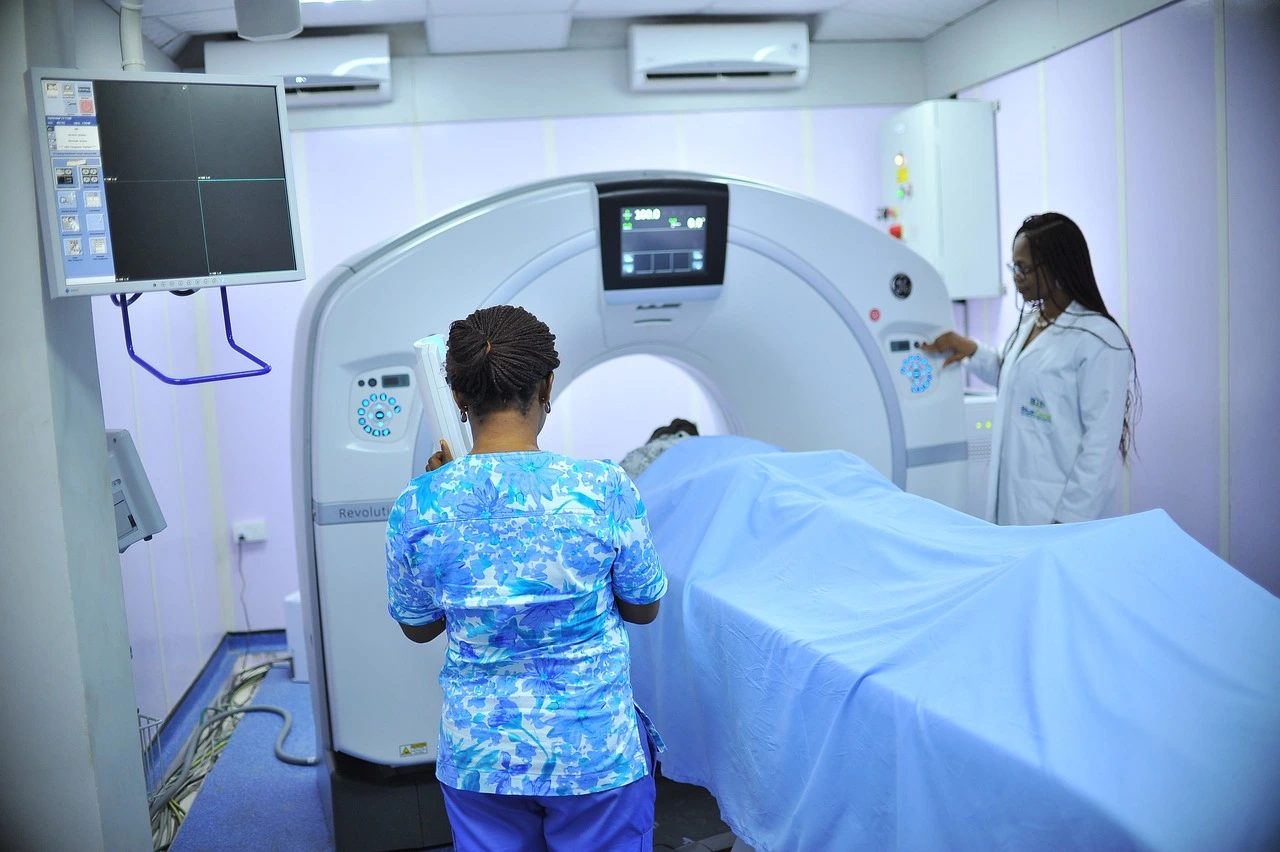
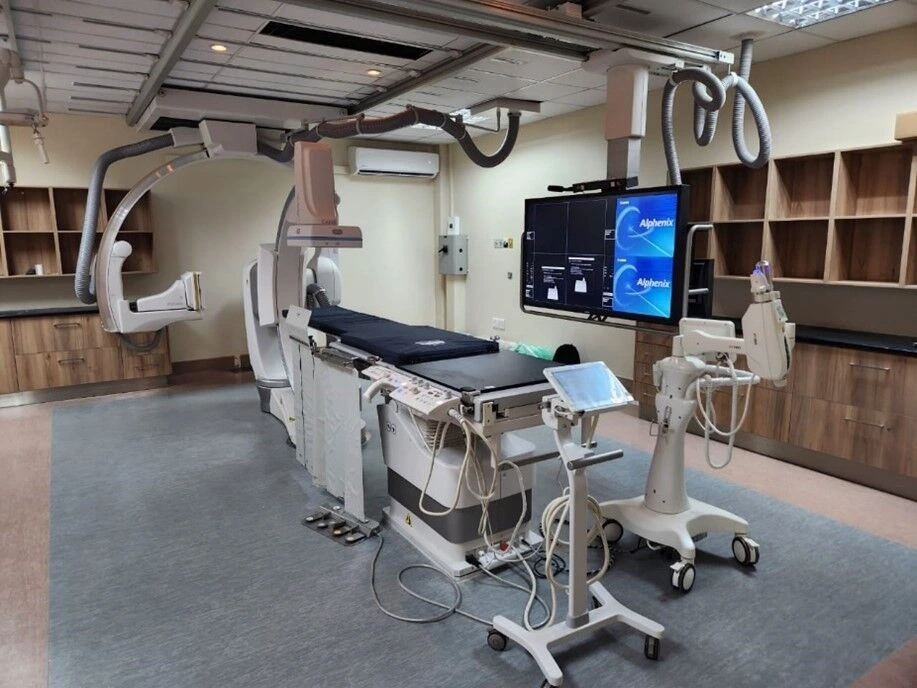
Medical imaging equipment such as MRI scanners requires specialized three-phase UPS systems to ensure clean, stable, and uninterrupted power in South Africa
In this blog, we investigate why medical imaging equipment requires specialised UPS systems in South Africa.
In medical imaging, a split-second power flicker does not just shut down a machine. It can invalidate scans, corrupt imaging data, force a system into a lengthy restart cycle, or, in the case of MRI scanner cooling systems, result in the purge of liquid helium, which cools the magnet and is very costly to replace.
MRI and CT scanners operate at extreme levels of precision. Because these systems depend on tightly controlled electrical input, even minor power instability results in immediate failure rather than gradual degradation.
Across healthcare facilities operating within the realities of the Southern African grid, this creates a critical vulnerability.
Protecting these environments requires more than backup power. It requires a deliberate power protection approach built around online double-conversion UPS and three-phase UPS systems, as outlined in Ensuring Uninterrupted Power Supply in South Africa with Standby Systems.
Why medical imaging equipment fails on an unstable power grid in South Africa
Imaging systems are designed to detect the smallest variations in the human body. That level of sensitivity leaves no margin for electrical inconsistency.
At the same time, real-world operating conditions introduce instability through load shedding, generator transitions, voltage dips, and frequency variation. This mismatch between precision demand and power quality leads to interrupted scans, corrupted or incomplete imaging data, extended restart cycles, particularly for MRI systems, and increased wear on sensitive internal components.
These are not isolated incidents. They are predictable outcomes when high-precision systems are exposed to unstable power.
Stop treating power failure as an inevitability in medical environments
In many facilities, power protection is approached as a response mechanism. When the grid fails, the system reacts. In imaging environments, that approach is already too late.
An online double-conversion UPS continuously regenerates clean power by converting the incoming AC (alternating current) supply to DC (direct current, like battery voltage) and back to AC. This process isolates imaging equipment from all upstream supply grid disturbances, removing the conditions that cause instability in the first place.
Instead of switching on during an event, the system maintains a constant, controlled output sine-wave current and voltage. This is what shifts power protection from recovery to prevention.
Why medical imaging needs more than general-purpose UPS systems
A general-purpose UPS is designed to respond to outages. Imaging environments demand something fundamentally different.
Medical imaging equipment introduces high inrush currents during start-up, rapid load variation during scan cycles, and strict tolerance requirements for voltage and frequency stability. For example, MRI magnets and CT gantry motors create sudden, high-power draws that can overload or trip underspecified systems, particularly during start-up or scan initiation.
A properly engineered UPS configuration addresses these challenges directly.
It continuously conditions power rather than reacting to failure. It stabilises dynamic loads without disruption. In transformer-based systems, such as the Riello and Pureline low-frequency UPS systems, galvanic isolation of the inverter from the load protects sensitive components used in these scanners from mains grid supply disturbances and reduces the impact of harmonic distortion of the scanner load onto the supply grid.
Industrial, three-phase UPS systems are designed not just to support the load, but to actively stabilise it under harsh operating conditions.
Which UPS system design fits your diagnostic facility?
Selecting the correct UPS system design depends on the scale and demands of the imaging environment.
High-demand imaging departments and large hospitals typically require robust transformer-based solutions, such as the Riello Master MPS, engineered for high loads and unstable grid conditions.
Facilities with higher capacity requirements and a focus on efficiency often implement the Riello Master HE, supporting large installations while maintaining performance under load.
For smaller hospitals, clinics, and specialised imaging rooms, the Riello Sentryum provides flexible, high-performance protection in a more compact footprint.
Each solution supports a tailored power protection approach, supported by the proven performance of Riello UPS systems.
Protecting patient outcomes with a medical UPS system in South Africa
When power instability affects imaging systems, the impact does not stop at the equipment.
It affects scheduling, delays diagnosis, and introduces uncertainty into clinical decision-making. Patients may need to return for repeat scans. Clinical teams lose time. Confidence in results is reduced.
A properly engineered medical UPS system in South Africa ensures that imaging environments remain stable and predictable, even when the surrounding electrical infrastructure is not.
Reliable imaging depends on power that is stable, protected, and uninterrupted at all times. Long-term reliability also depends on the correct specification of energy storage, particularly for UPS batteries in South Africa.
Let’s design three-phase UPS systems for uninterrupted medical imaging
Whether you are managing a high-volume diagnostic centre in Johannesburg or supporting healthcare infrastructure across Southern Africa, the requirement is the same. Imaging systems must operate without power interruption.
Standby Systems works with healthcare providers across South Africa, Namibia, Angola, Botswana, Zimbabwe, Mozambique, Lesotho, Eswatini, and Malawi to design three-phase UPS systems, online double-conversion UPS solutions, and industrial UPS systems that align with real-world conditions.
If your imaging environment cannot tolerate failure, your power strategy should not either.
Speak to us about developing a power protection approach that suits your medical facility.
Visit Standby Systems’ website, or find us on Facebook, LinkedIn, Instagram, and YouTube.
In our experience, we have encountered nine common UPS specification mistakes, so we put together…
In this blog, we detail why generator-supported loads still need online UPS protection. Many organisations…
Southern Africa is at a turning point with its power production, but we are not…
In this blog, we discover how UPS systems protect distribution centres, courier facilities, and warehouse…
In this blog, we uncover five more industries where power instability creates immediate operational risk.…
Standby Systems shares what SECUREX 2026 confirmed about UPS power protection in South Africa’s security…