South Africa's electricity grid is struggling
In a country where reliable power is essential for businesses, individuals, and critical infrastructure, a UPS is indispensable. South African businesses and industries in all sectors can benefit from reliable UPS systems to safeguard electrical equipment and ensure business continuity. In this blog, Standby Systems, a leading UPS provider in Southern Africa since 2003, explains what a UPS is, its functions, and why it’s crucial for protecting your electronic devices and operations.
A UPS goes beyond simple battery backup—it is a power management device designed to keep your equipment running smoothly during power interruptions. A typical three-phase UPS system includes an input AC cable hard-wired to the input terminals or busbars (or SWIN as it is known in a Riello MPT, MHT, MHE, SENTRYUM, etc.).
UPS systems also offer power surge protection and electrical noise filtering on both input and output sections. An associated high-rate backup battery like an ELITE Valve Regulated Lead Acid (VRLA) and hard-wired AC cable to the inverter output section, or SWOUT, as it is known in Riello products, will ensure your connected loads and critical electrical systems are protected and operational when the power goes out. For more information about the role batteries play in a UPS, read our blog: Everything you need to know about a UPS Backup Battery.
UPSs range in physical size and capacity. For example, transformerless systems have a smaller footprint, and parallelable monolithic and modular solutions allow for scalability and redundancy, enabling businesses to meet expanding power requirements and ensure continuous uptime. Parallelable monolithic UPSs provide backup capacity in a single, unified unit, while modular solutions offer the flexibility to add or replace individual modules as needed, minimizing downtime and optimizing maintenance.
UPS systems range in capacity and configuration to suit diverse applications, from smaller 10 kVA three-phase units up to 800 kVA/kW and, in parallel configurations, up to 6400 kW. Single-phase models are also available, starting from 6 kVA (such as the Riello SDU and STW series) up to 20 kW (Sentryum range). Our UPS systems support various critical environments, including medical facilities with sensitive equipment, data centres with extensive servers and networking infrastructure, and heavy-duty applications in mining and industry.
Under normal conditions, a UPS system’s rectifier converts incoming AC power into DC power to charge the battery (often using a sealed absorbed glass mat or AGM technology). This DC power then feeds the inverter stage, where it is reconverted to clean, pure sinewave AC power at a stable 50 Hz frequency (230/240/220/400 VAC, single- or three-phase). Using advanced components like IGBTs in a controlled process called pulse width modulation (PWM), the UPS performs two conversions—AC to DC and back to AC—referred to as double conversion. This method provides continuous, high-quality power to connected equipment, protecting it from spikes, surges, and fluctuations that could otherwise cause damage. For more information about double conversion UPS technology, read our blog on the subject.
When a power outage occurs, there is no switching to battery or break in output power instead, the battery simply goes from a state of drawing charge current to giving current to the inverter and temporarily taking over from the rectifier to keep the load running, thus allowing connected devices to remain powered until the critical loads are powered down or an alternative AC supply source like a generator starts up and supplies the rectifier. This feature is critical for sensitive equipment like computers and servers, preventing sudden shutdowns that can lead to data loss.
Ageing grids, fluctuating demands, and occasional extreme weather events challenge Southern Africa’s power infrastructure. A brief power interruption or surge can cause irreparable damage to equipment and lead to data loss. For businesses, these disruptions can translate into significant downtime and revenue loss. Investing in a UPS system minimises these risks, providing continuous power and protecting your equipment and data.
UPS systems are designed to absorb sudden spikes in voltage, reducing the risk of electrical damage. They also filter out electromagnetic (EMI) and radiofrequency noise (RFI), which helps maintain the integrity of connected devices, from computers to industrial machinery.
Inconsistent voltage can harm sensitive electronics. UPS systems regulate the voltage, ensuring a stable power supply that prevents damage and extends equipment life.
Even during prolonged power outages of up to one hour, the high-rate VRLA battery connected to a UPS ensures that your devices remain operational for a limited time. This is essential for saving work, shutting down systems properly, or maintaining operations until backup power can be established.
When selecting a UPS, it’s important to consider various factors that can affect performance and suitability for your specific needs.
Calculate the total power requirement for your devices and select a UPS with a watt capacity 20-30 % higher to accommodate any future expansion or increased load. Make sure you consider peak loads, as the maximum peak any UPS can achieve is three times the running current. So, if there are motors, plasma cutters, etc, make sure to take this into consideration, or your new UPS will not work.
When selecting a UPS, ensure it has sufficient power capacity by focusing on its true power rating, measured in watts (W), rather than just the apparent power or VA rating. Many buyers only consider the VA rating, but a 40 kVA UPS can vary widely in actual power output—often available in 32 kW, 36 kW, or 40 kW configurations. While a 40 kW unit may cost more, it delivers up to 20% more power than a 32 kW model, even if both are rated at 40 kVA. This higher true power rating ensures better support for connected equipment, especially during critical load demands.
Consider the required runtime of the UPS to support your devices during an outage and pay close attention to the design life and technology of the UPS battery. For example, a 100 kVA UPS using 32 x 105Ah batteries may offer shorter runtime than one with 32 x 80Ah batteries that use high-rate technology. Instead of just looking at amp-hour ratings, focus on the watts-per-cell or block capacity (w/cell x 6) to accurately gauge which battery will best meet your backup time needs. This approach helps ensure reliable power for the duration you require.
When comparing UPS quotations, check at what percentage load the battery backup time is calculated. A cheaper quote may reflect a battery sized to support only 50% or 60% of the inverter’s full capacity rather than 100%, resulting in a much smaller battery and potentially shorter runtime than you expect.
It’s also important to note that once a battery is installed, you cannot extend runtime later by adding more cells, as mixing new and old lead-acid cells can cause performance issues. However, lead-acid batteries have the advantage of being 100% recyclable at the end of their lifespan, allowing for easy and local disposal. In contrast, Lithium technology is not only poisonous but leaves you, the user, with the BIG problem. No company currently recycles what is then considered a hazardous goods product in Southern Africa and requires special packaging and shipping containers to an offshore facility at massive cost to you, the user, or throw it on the dump and poison the earth as this is the only alternative!
Ensure the UPS supports the voltage standards in your region. For Southern Africa, this is typically 230VAC single phase from 6 to 20 kVA like the Riello SDU and STW or 380 / 400 VAC three-phase like the SENTRYUM and the MPS, which differs from regions like North America, where lower voltages like 110 VAC 1 phase and 208 VAC three phase are more common. The latest UPS technologies operate at either 50 or 60 Hz, so frequency is not a problem.
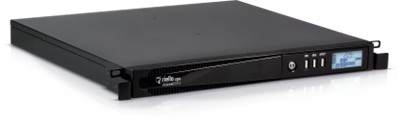
Modern UPS systems often include LCD screens, graphic front panels, and light-emitting diode or LED indicators to display critical information like battery status, voltage input, and load capacity, give alarm status, and allow interrogation of the unit and its various voltage, current, and loading levels, battery status, self-test, etc. This is particularly useful in settings where immediate monitoring is required.
For businesses and industrial facilities, a UPS system provides crucial benefits that go beyond just backup power. Here are some of the most important advantages:
A UPS ensures power continuity, keeping applications and networks running. This is vital for industries where even a momentary interruption can cause significant loss.
A UPS protects valuable data by allowing controlled shutdowns when the utility power supply fails or exceeds the maximum tolerance percentage that the connected load cannot tolerate, leading to permanent damage. This feature is critical for preventing data corruption, especially in systems that handle real-time data processing or sensitive transactions.
By regulating voltage and protecting against surges, a UPS extends the life of connected devices, saving costs on repairs or replacements.
Standby Systems, along with AROS Riello UPS in Italy, has been the trusted name in UPS sales in Southern Africa since 2003. You can read more about the partnership in this article.
We provide a range of UPS systems suitable for all commercial and industrial applications and a comprehensive design, installation, and maintenance service. Our expertise in managing power systems ensures that our clients receive customised solutions tailored to their specific needs, keeping their operations protected and efficient.
Whether it’s a single-phase UPS system of 6 to 20 kW for commercial use or large-scale three-phase setups of 10 to 800 kW up to 6,4 MW for industrial facilities and data centres, in both transformer-based and transformerless output inverter technology, Standby Systems is committed to meeting all your power protection needs. Our certified technicians are equipped to handle everything from routine maintenance to complex installations, providing peace of mind through reliable and responsive service.
For more information, contact Standby Systems. Our experienced technical team is ready to advise you on the best UPS system and battery solutions for your business or industry’s needs and assist in servicing your UPS. Visit Standby Systems’ website or contact us at 011 794 3406 for services, 011 794 2541 for UPS systems for sale, or our UPS contact number at 082 450 2361.
Find us on Facebook, LinkedIn, and Instagram.
In our experience, we have encountered nine common UPS specification mistakes, so we put together…
In this blog, we detail why generator-supported loads still need online UPS protection. Many organisations…
Southern Africa is at a turning point with its power production, but we are not…
In this blog, we discover how UPS systems protect distribution centres, courier facilities, and warehouse…
In this blog, we uncover five more industries where power instability creates immediate operational risk.…
Standby Systems shares what SECUREX 2026 confirmed about UPS power protection in South Africa’s security…